-
 The lawsuit comes about six weeks after the Florida attorney general sent a 28-page letter to Times executives, questioning the accuracy of news articles going back several years, declaring they were “publicly documented failures.”
 -
 Two days after a U.S. strike on an alleged narcotics boat in the Caribbean, a scorched 30-foot-long boat washed up on a Colombian beach near the Venezuela border. Then, two mangled bodies. Then charred jerrycans, life jackets and dozens of packets. The assortment of singed flotsam appears to be the first physical evidence of the deadly U.S. campaign.
 -
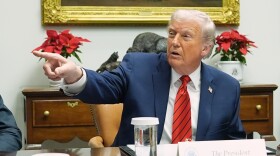 The CIA conducted a drone strike on a port facility in Venezuela last week, according to people briefed on the operation, a development that suggests an aggressive new phase of the Trump administration’s pressure campaign against the Maduro government has begun.
 -
 John Koch, a radio reporter, witnesses every execution in Florida to keep close tabs on what he considers one of the most consequential actions the state takes.
 -
 After returning to power, President Donald Trump halted and then changed the terms of Chevron’s operations in Venezuela, contending that it minimizes the company’s financial transfers to the country. Rather than funneling dollars into Venezuela directly, Chevron now hands part of the oil it produces to the Venezuelan government, which continues to own the oil fields.
 -
 The move is an escalation of military operations and a pressure campaign against Nicolás Maduro, Venezuela’s leader. But its scope and economic impact are not clear.
 -
 The U.S. military struck three boats it suspected of carrying drugs in the eastern Pacific on Monday, killing eight people, the U.S. Southern Command announced.
 -
 The Honduran attorney general announced Monday night that he had issued an international arrest warrant for the country’s former president, Juan Orlando Hernández, who was recently pardoned by President Donald Trump and released from prison in the United States.
 -
 Florida Gov. Ron DeSantis said Monday that he had signed an executive order declaring the Council on American-Islamic Relations, one of the nation’s largest Muslim advocacy and civil rights groups, a foreign terrorist organization.
 -
 The Miami mayor’s race hardly made a blip on the national radar in years past. It is officially nonpartisan. The city has a relatively small population of about 500,000 people, and the mayor’s powers are limited. This year is different.
 -
 Blooms of yellowish-brown seaweed along the Equator are breaking records and defiling beaches, while a centuries-old patch farther north is disappearing.
 -
 The government presents its migrant policy as a welcoming alternative to U.S. crackdowns. But activists say those arriving on boats from Africa are excluded from that embrace.

© 2026 WLRN
Play Live Radio
Next Up:
0:00
0:00
Available On Air Stations


