-
 The government reports over 6,500 dead and 1,500 missing, but independent groups estimate more. Antonella and Pedro distribute flyers and ask around, determined to find him. They suspect Andres might have autism and believe he may not want to be found.
 -
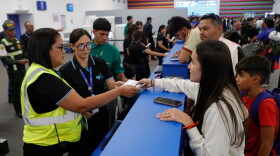 Venezuela's main airport has partially resumed operations nearly 10 weeks after two devastating earthquakes. A temporary area with metal structures has been set up at Simón Bolívar International Airport to serve passengers while repairs continue. The airport near Caracas was closed after severe damage from the June 24 earthquakes, which left over 6,500 people dead and thousands homeless.
 -
 As part of the deal, the U.S. is creating a private company as a joint venture with North American Blue Energy Partners, owned by Venezuelan businessman Alejandro Betancourt.
 -
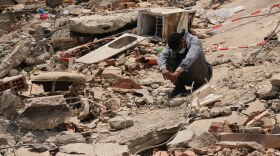 More than a month after Venezuela's devastating earthquakes, public health experts tell The Associated Press the coming weeks are critical to prevent secondary crises from contaminants. Dust from collapsed buildings fills the air, and garbage piles up. Some people are reporting respiratory illnesses.
 -
 Hundreds of Miami-Dade Fire Rescue members were welcomed back to Miami this Sunday after spending over a week assisting in search and rescue missions in Venezuela following the country's devastating twin earthquakes.
 -
 Aid groups are warning that Venezuela's healthcare system is at its breaking point nearly a week after two powerful earthquakes hit the South American country. Damaged hospitals are overwhelmed and conditions in the disaster zone are worsening. The government death toll has surpassed 1,700, with more bodies being found. A humanitarian crisis is unfolding, with thousands displaced and living in unsanitary conditions.
 -
 Survivors say more than 100 people just deported from the United States were being held in a hotel when earthquakes struck Venezuela, setting off a scramble to find survivors and bodies buried in the rubble. A deportation flight from Miami arrived in Caracas hours after Wednesday's earthquakes.
 -
 National Assembly president Jorge Rodríguez announced the releases Tuesday in Caracas. He didn't specify if they're political prisoners, but human rights defenders say some are. Rodríguez emphasized the gesture without asking for anything in return. This announcement comes amid scrutiny over the in-custody death of Víctor Hugo Quero, considered a political prisoner, and his mother's recent passing.
 -
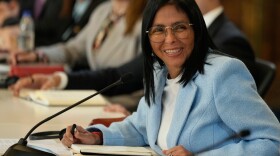 Venezuelan lawmakers have approved a bill to regulate mining as the country seeks to attract leery foreign investors to a once-private industry that has long been exploited by criminal groups with ties to the government.
 -
 Families of Colombians imprisoned in Venezuela gathered at a Colombia-Venezuela bridge hoping to appeal for the release of their relatives during a meeting that never happened. On Friday, relatives arrived at the crossing expecting to display signs requesting their relatives' release during a scheduled meeting between Colombia's president and Venezuela's acting president. But the governments abruptly canceled the meeting the night before.
 -
 Venezuela’s Orinoco River Basin is a wild land of lush forests, grasslands and a vast delta of jungle wetlands teeming with wildlife. During the rainy season, the Orinoco is the world’s third-largest river by discharge. But this region – which Venezuelans rely on for water and hydropower – is facing a growing environmental disaster.
 -
 Venezuela's acting president Delcy Rodríguez has signed into law an amnesty bill that could lead to the release of politicians, activists, lawyers and many others. The move effectively acknowledges that the government has held hundreds of people in prison for political motivations

© 2026 WLRN
Play Live Radio
Next Up:
0:00
0:00
Available On Air Stations


