

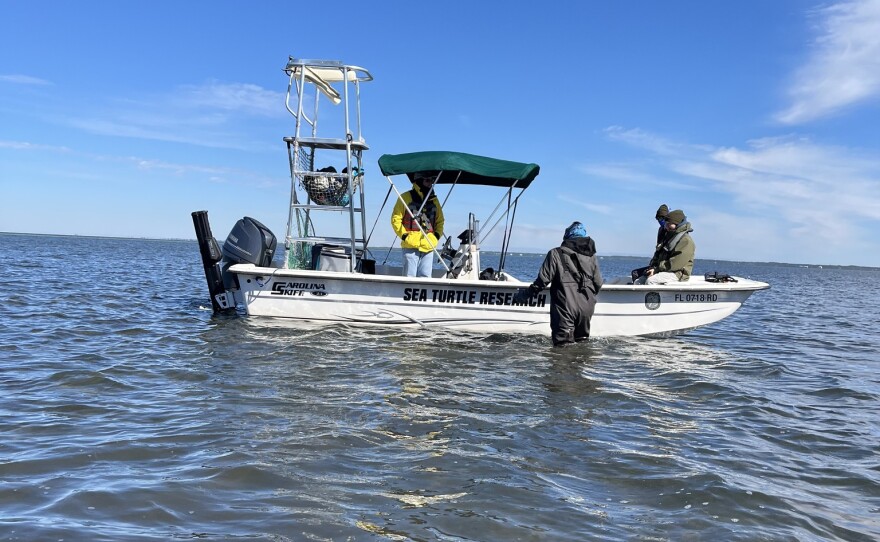
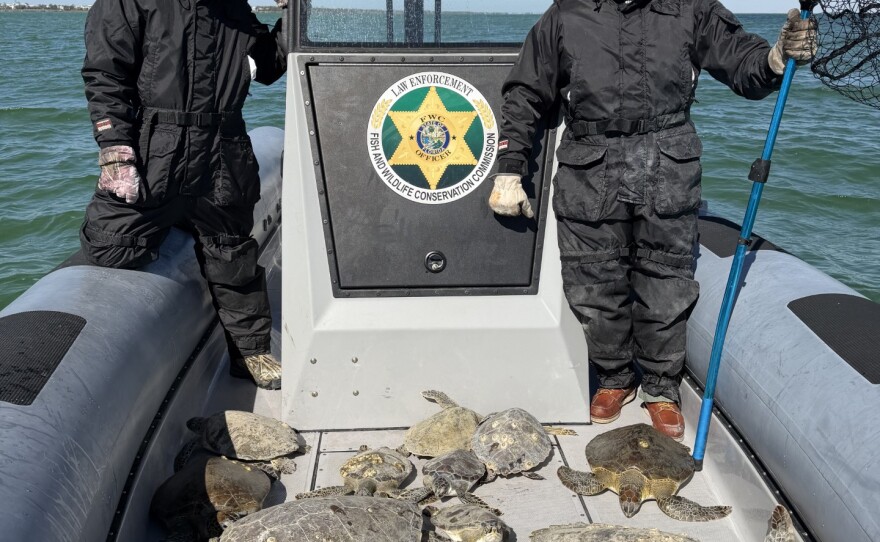
Like most humans, sea turtles enjoy swimming in warm water. They prefer it to be at least 75 degrees, but they tolerate water as chilly as 50.
And when the temperatures drop, as they did across the state recently, they struggle to stay comfortable. They end up going limp, washing up cold-stunned on the shore.
Late last month, record-low temperatures cooled down the waters of the Gulf and the Atlantic significantly, causing almost 800 sea turtles to wash ashore across Florida's beaches.
Allen Foley is a wildlife biologist with the Florida Fish and Wildlife Conservation Commission.
He said the water has to be unusually cold for this to happen.
"When the water drops below 50 degrees, when it gets in the 40s, then it gets to be too cold for turtles," he said. "They can tolerate it for a short period of time, say a day or so, but after that, they begin to succumb."

Foley added these events are rare.
"We typically see notable cold stun events about two or three times every ten years, so it's definitely not an annual thing," he said.
However, when they do happen, rescuers need to be ready for thousands of turtles to wash up on beaches.
"The largest one we had was in 2010, which lasted two weeks and totaled almost 5,000 sea turtles," Foley said. "This year we totaled almost 800, so it's much less than our biggest year.
"Still, coordinating the rescue, transport and holding of 800 turtles within a week is a daunting task," Foley continued.
Rescued turtles are usually kept in rehabilitation for about 24 to 48 hours before being released back into the wild.
Unlike many stranded or injured turtles that require months of rehabilitation, cold-stunned turtles are usually otherwise healthy.
"Rehab is actually pretty simple," Foley said. "Cold-stunned sea turtles, for the most part, are healthy individuals that have just been exposed to temperatures that are too cold, and as long as they get out of those temperatures and back into something they can tolerate, they'll recover pretty quickly."
Tampa Bay conservation organizations are heavily involved in recent rescue efforts.
The Tampa Bay Times reported, as of last week, the Clearwater Marine Aquarium has taken in over 35 turtles, while the Mote Marine Aquarium in Sarasota was caring for about 25.
The Florida Aquarium in Tampa said it rehabilitated a pair of juvenile turtles named "Patriot" and "Seahawk" that were brought in on Super Bowl Sunday.


Efforts to rescue and rehabilitate the turtles are crucial to the species' survival.
For conservationists, the stakes are high.
"All sea turtles are either endangered or threatened," Foley said. "We have threatened and endangered sea turtles in Florida. The one that is typically involved in cold stunning is the green turtle, which is threatened."
Wildlife officials say beachgoers should not attempt to rescue or push cold-stunned turtles back into the water.
If you see a stranded turtle on the beach, call the FWC wildlife alert hotline immediately at 888-404-FWCC (3922).
Copyright 2026 WUSF 89.7


