-
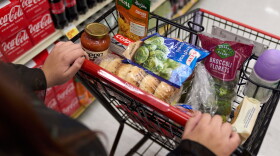 High error rates don’t bode well for people who rely on the food security program. But it could be good financial news for Florida, which may avoid having to pay a $1 billion penalty if it wants to continue to participate.
 -
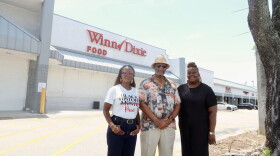 The longtime grocery store provided more than food, serving as a pharmacy, banking hub, employer and gathering place in the predominantly Black neighborhood.
 -
![Arely B. Lozano Cantú [pictured above], is director of health access and livability for Urban Health Partnerships, a South Florida non-profit organization that helps locals find food distribution sites through an AI-powered app, is expanding and enhancing its platform to help feed more people. It was recently awarded a $50,000 grant from Citizens Florida, part of Citizens Financial Group, through its Champions in Action program that supports non-profits.](https://npr.brightspotcdn.com/dims4/default/5ebe310/2147483647/strip/true/crop/2048x1141+0+360/resize/280x156!/quality/90/?url=http%3A%2F%2Fnpr-brightspot.s3.amazonaws.com%2F6e%2Fdc%2F8ab1d0d74b908c86995c1d615d0f%2Farely-2048x1861.jpeg) The Community Food Finder app launched during the government shutdown last October, when many workers were furloughed and SNAP benefits were withheld.
The Community Food Finder app launched during the government shutdown last October, when many workers were furloughed and SNAP benefits were withheld. -
 The number of Florida residents who receive federal food assistance dropped by 23% during the past year, state data published this month show.
 -
 If Florida doesn't lower its SNAP error rates the state could have to pay as much as $1 billion. FDP Chair Nikki Fried says that might be by design.
 -
 Newly released data from the U.S. Department of Agriculture show that Florida has lowered its error rate for a federal food aid program to 12.97%, but that’s not enough to avoid a nearly $1 billion cost-share contribution next year.
 -
 With school ending soon, parents worry about feeding children through summer.
 -
 Florida's SNAP restrictions went into effect Monday. Here's what you can't buy.
 -
 Florida is one of 22 states with federal permission to implement nutrition-based restrictions on purchases with the Supplemental Nutrition Assistance Program (SNAP).
 -
 As the partial government shutdown passes the one-month mark, a food distribution for affected federal employees will take place on Tuesday, March 17, from 10 a.m. to 2 p.m. in the employee parking lot at Miami International Airport.
 -
 In response to growing concerns over federal food assistance stability, the City of North Miami Beach will be distributing free food to local residents on Saturday, beginning at 10 a.m.
 -
 At least a dozen federal datasets have been axed or altered under the Trump administration. They track issues such as climate change, food security and health outcomes.

© 2026 WLRN
Play Live Radio
Next Up:
0:00
0:00
Available On Air Stations


![Arely B. Lozano Cantú [pictured above], is director of health access and livability for Urban Health Partnerships, a South Florida non-profit organization that helps locals find food distribution sites through an AI-powered app, is expanding and enhancing its platform to help feed more people. It was recently awarded a $50,000 grant from Citizens Florida, part of Citizens Financial Group, through its Champions in Action program that supports non-profits.](https://npr.brightspotcdn.com/dims4/default/e130f67/2147483647/strip/true/crop/2048x1141+0+360/resize/560x312!/format/webp/quality/90/?url=http%3A%2F%2Fnpr-brightspot.s3.amazonaws.com%2F6e%2Fdc%2F8ab1d0d74b908c86995c1d615d0f%2Farely-2048x1861.jpeg)


