-
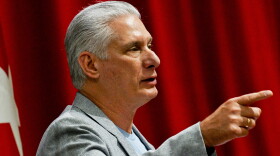 Cuban President Miguel Díaz-Canel accuses the United States of hypocrisy for promoting private enterprise in Cuba while imposing new restrictions on Cuban businesses.
 -
 Cuba is facing severe challenges, with blackouts and shortages affecting daily life. Yet classical ballet remains a cherished cultural institution. The National Ballet School in the capital of Havana continues to train young dancers, blending rigorous dance instruction with academics.
 -
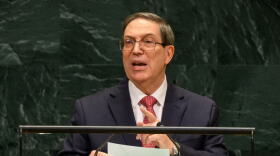 Addressing the United Nations General Assembly on Saturday, Cuban Foreign Minister Bruno Rodríguez Parrilla slammed U.S. foreign policy, accusing the Trump administration of carrying out a "ruthless siege" and imposing an illegal "energy blockade" designed to suffocate the island's economy.
 -
 The defendant and his co-conspirators ran an alien smuggling organization that charged migrants between $1,500 and $40,000 for transport, occasionally chartering private planes.
 -
 COMMENTARY President Trump all but confirmed this week he'll keep Venezuela's unpopular acting leader Delcy Rodríguez in place indefinitely. But could he remove her now even if he wanted to?
 -
 During his speech, Trump declared that his administration is actively pursuing a "fundamental change" in Havana, revealing that Secretary of State Marco Rubio is deeply involved in diplomatic talks with the Cuban government.
 -
 COMMENTARY A new Cuba poll should make the U.S. — especially U.S. Cubans — realize that without any democratic past to refer to, Cubans will prioritize economic improvement over political change.
 -
 Liexer De La Cruz had spent five years building a life in the United States after crossing almost a dozen countries by car, foot, bus and boat. But in early January, while attending what he thought was a routine hearing on his immigration case, he was forced to choose between deporting himself or staying in the U.S. and risk deportation at any moment. He chose Cuba.
 -
 Liexer De La Cruz had spent five years building a life in the United States after crossing almost a dozen countries by car, foot, bus and boat. But in early January, he was forced to choose between deporting himself or staying in the U.S. and risk deportation at any moment. He chose Cuba.
 -
 The wife of a man killed when an Amazon cargo plane overran the runway at Miami International Airport is suing for wrongful death.
 -
 Cuban state television aired footage Saturday night showing Castro, 95, in his olive-green military uniform. His grandson, Raúl Guillermo Rodríguez Castro, accompanied him in the role of bodyguard.
 -
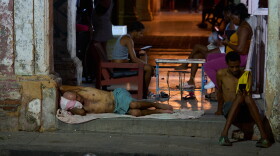 The U.S government has hit Cuba with new sanctions in a fresh push to strangle the island’s economy and deepen its multiple crises.

© 2026 WLRN
Play Live Radio
Next Up:
0:00
0:00
Available On Air Stations


