

This weekend is often referred to as the unofficial start to the summer. Florida is a very popular spot, and many locals flock to the beach to enjoy the holiday. The highest storm risk will be mainly focused across the interior and western coast of Florida in the afternoon. The wind is blowing steadily toward the shore along Florida's East Coast and from the South toward the Panhandle Coast, which is increasing the risk of rip currents.
It is often believed that rip currents pull you underwater, but this is a misconception. Rip currents are fast-moving channels that can drag a swimmer away from shore and exhaust them as they try to fight their way back to safety. This is what often results in deaths. The National Ocean Service estimates thousands of people are rescued from rip currents each year in the U.S. The United States Lifesaving Association estimates that the annual number of deaths due to rip currents on our nation's beaches exceeds 100. Rip currents account for over 80% of rescues performed by surf beach lifeguards. Rip currents are the leading cause of surf-related deaths. So far this year, 6 people have died from rip currents in Florida, but there were hundreds of rescues during the Spring Break season.

Tips if you are caught in a rip current
The NWS recommends swimming near a lifeguard if you're at the beach. If you're caught in a rip current, it’s best to remain calm. Swim parallel to the shore, not toward it, until you’re free of the current. Then swim back to land. If you're unable to escape, face the shore and call or wave for help. Make sure to check your beach conditions here, before you head into the water this summer:
What are rip currents?
There are different types of rip currents. The bathymetry of the bottom controls some, while nearby structures control others. Bathymetry-controlled rip currents include channelized tip currents and focused rip currents.
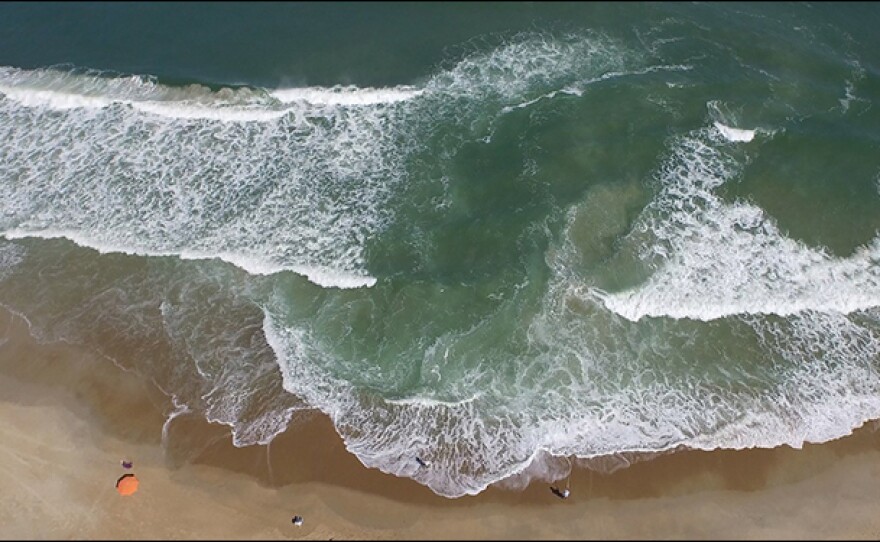
The most common and well-understood ones are channelized rip currents. They are easier to identify, with widths ranging from 5 to 100 yards. They can be as little as 3 feet deep or as deep as 10 feet, and they can be spaced apart between 50 and 500 yards. This type of rip current can happen in a fixed location for days, weeks, or months. These types of rips are easier to identify because their path is usually darker, appearing calmer than the surroundings, while the surface has a choppy, rippled texture.




Why do they form?
Rip currents are caused by uneven wave breaking along coastlines, including oceans, seas, and lakes. They can form on all types of beaches, especially near structures like piers, jetties, or sandbars.
These currents develop due to differences in wave breaking: more waves result in higher water levels, known as wave setup, while fewer waves lead to lower levels. Water moves from high- to low-set areas and then funnels offshore, forming a rip current. When strong winds blow directly toward the land from offshore, the risk of rip currents typically increases.
Focused rip currents occur in fixed locations but are controlled by alongshore variations in breaking waves, which are often created by offshore sea floor features like submarine canyons, ridges, and sandbars. The location of this kind of rip current can vary depending on the direction of the approaching wave. If looked at from above, you can spot these currents as there are swirls of turbulent water and sediment that flow offshore.


