
-
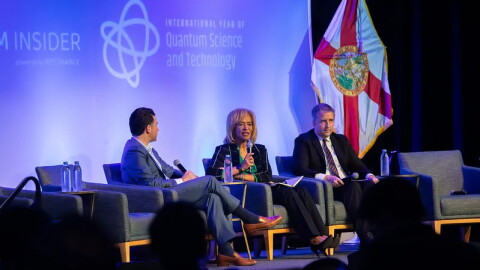 Palm Beach State CollegeBusiness Development Board leverages nearly $15 million in state and federal money to get in the game.
 -
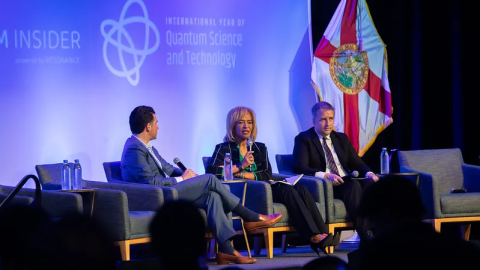 Palm Beach State College/Stet NewsLocal leaders are encouraging quantum computing’s top companies and customers to ride the field’s development wave to Palm Beach County. The Business Development Board leveraged nearly $15 million in state and federal money to get in the game.


-
 The crew of four — two NASA astronauts, one from Canada, and a Russian cosmonaut — heads to the International Space Station after liftoff from the Cape Canaveral Space Force Station in Florida.
 -
 The next NASA crew rotation on the International Space Station has been delayed, extending the stay of the current crew aboard.
 -
 Lawmakers face pressure to respond to growing alarm over artificial intelligence, after a researcher from leading AI company Anthropic resigned and said in a public X thread that AI could “kill us all in a decade,” and AI leaders themselves called for a slowdown.
 -
 The Department of Education will consider approving its own rule Wednesday. It would require all public colleges to craft policies addressing the AI use of staff and students.
 -
 In late August and early September, the largest collection of Florida's most endangered coral spawned in a Key Largo nursery. Thousands of babies are now being raised in labs around the state, which scientists hope could help revive elkhorn coral on North America's only barrier reef.
 -
 It turns out, humans aren’t the only species with picky eaters – mosquitoes can also be finicky.
 -
 Researchers at UF Tropical Research and Education Center started growing arabica plants in South Florida to test if coffee could become Florida's next specialty crop.
 -
 Designers usually measure how “green” a building is by its carbon footprint. But a green building has to last for its intentionally small carbon footprint to make a positive difference.
 -
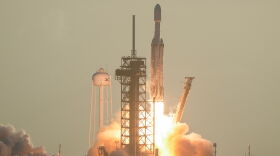 NASA's newest space telescope has blasted off on a quest to find planets around other stars and explore the hidden universe. SpaceX launched the $4 billion Roman Space Telescope on Sunday from Florida's Kennedy Space Center. Roman blazed toward an observation point 1 million miles away that's home to the Webb Space Telescope, one of NASA's other crown jewels in the sky.
 -
 NASA's Nancy Grace Roman Space Telescope launches Aug. 30 on a mission to explore some of the most pressing mysteries of the cosmos.


