-
 Cuba has run out of oil, the country’s energy minister announced on May 14, 2026. As an economist specializing in Latin America and a master’s candidate in public policy, we believe that the broader history of Cuba’s energy sector sheds some light on the current situation.
 -
 Juno Beach-based NextEra Energy, the parent company of Florida Power & Light, announced Monday a deal to buy Richmond, Virginia-based Dominion Energy, combining two of the largest utility providers on the U.S. East Coast.
 -
 Florida electric utilities initially said they were going to decrease their use of natural gas by 18% in the next decade, but their updated plans now show an increase of 2%, instead.
 -
 Cuba's government is confirming that it recently met with U.S. officials on the island. Tensions remain high over the U.S. energy blockade. Senior U.S. State Department officials say American diplomats flew to Cuba earlier in April for the first time since 2016. Neither side has specified when exactly the meeting took place or which U.S. officials were involved.
 -
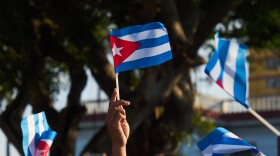 Hundreds of Cuban women have gathered in Havana to decry a U.S. energy embargo and other measures imposed by U.S. President Donald Trump that are strangling the Caribbean island. Tuesday's rally was organized by the Federation of Cuban Women. It is a massive organization with close ties to the government and the Communist Party.
 -
 Two U.S. lawmakers are calling for a permanent solution to Cuba's crises after witnessing the effects of a U.S. energy blockade during an official visit to the island.
 -
 Utility profit margins are one reason why electricity bills are rising, the report says. Advocates say low-income communities are hardest-hit by the costs.
 -
 Republicans advocating for the preemption say clean energy efforts are more costly than fossil fuel use, despite Tampa recently showing significant savings from such practices.
 -
 Cuba's power grid collapsed Saturday leaving the country without electricity for a third time in March as the communist government battles with a decaying infrastructure and a U.S.-imposed oil blockade.
 -
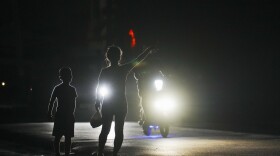 Officials in Cuba report an islandwide blackout in the country of some 11 million people as its energy and economic crises deepen. The Ministry of Energy and Mines notes a "complete disconnection" of the country's electrical system and says it is investigating.
 -
 Critics warn documentation rules could flag eligible voters as “unverified,” creating new hurdles for people without passports, birth certificates or updated legal records
 -
 A Florida House committee has advanced a proposal that could ultimately add more nuclear power to the state’s energy portfolio.

© 2026 WLRN
Play Live Radio
Next Up:
0:00
0:00
Available On Air Stations


