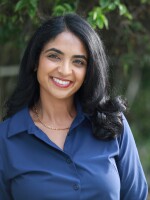
On an average day, a primary care pediatrician cycles through room after room treating anything from an allergic reaction, to a fever, to conducting a routine school physical.
It’s a field that requires a dizzying amount of knowledge, spanning from newborns to 18-year-olds. And Miami pediatrician Dr. Leah Utset absolutely loves it.
“There's so much I love about medicine,” she said. “But it's a really... it's a hard time to be a pediatrician right now.”
That’s because pediatricians all over the country are facing increasing mistrust in what is perhaps the bedrock science of modern-day pediatrics: vaccines.
Last year, Florida's Surgeon General called to end all vaccine mandates. Policy has yet to change, but the state is in the process of removing four vaccines for public school attendance. Meanwhile, parents are confused, vaccine hesitancy is growing and vaccine exemptions are the highest in a decade.
READ MORE: Florida's surgeon general wanted to repeal vaccine mandates. They remain, but hesitancy is growing
Over the past two years, Dr. Utset has heard more and more questions from parents. She usually sees anywhere between 20 and 30 patients a day as a primary care pediatrician.
“ It's at least once, if not many more times per day, I am talking through vaccines and why we use them, how we use them, which of course is not a bad thing to go through. It's just you don't have a lot of time allotted for that in a day, and so it's hard,” she said.
At an average physical exam appointment, most pediatricians are trying to cover a lot of ground. Depending on the age they may be screening for developmental delays, discussing sleep and nutrition, assessing school readiness or even addressing concerns about puberty.
“It's like if you had 20 to 30 meetings per day and … you had to go through every problem and come up with a solution by the end of the meeting … and then also do follow-up afterwards, and documentation, and phone calls, and follow up on labs and things like that. So it's a lot,” she explained.

And now each of those meetings are being derailed by combating misinformation around vaccines.
“We have all of these things that we need to address. And when something as proven safe and effective and important as vaccines takes a disproportionate amount of our time and energy because we're addressing claims that seem to just be coming faster and faster every day – it can be exhausting,” explained Dr. David Higgins, a vaccine policy expert and assistant professor of pediatrics and public health at the University of Colorado School of Medicine.
“And one of the exhausting parts of this is the moral distress that we feel as pediatricians, because we know that some of these things are so important to a child's health, so important to helping them thrive.”
Utset carries a little bit of extra baggage when it comes to vaccine misinformation. She decided to become a doctor while spending summers in her grandmother’s clinic in Chattanooga, Tennessee.

Her grandmother, Dr. Minnie Vance, was a pediatrician who went to medical school in the 1940’s – long before most vaccines we use today were developed.
“She practiced till she was 89 years old, and she saw this evolution of vaccines saving hundreds of lives of kids that she was working with in the small community she worked in,” Utset said.
In her grandmother’s lifetime, pediatrics went from an infectious disease-based practice to a prevention-focused practice, she explained.
Vaccination mandates for public school attendance have been key to this progress. Nevertheless, the attempts to end mandates in Florida continue.
Just this month, the Florida Department of Health (DOH) moved forward in the process to remove the four vaccines that are regulated at the level of the Florida DOH for public school attendance: hepatitis B, varicella (for chickenpox), Haemophilus influenzae type b (Hib) and pneumococcal conjugate vaccines.
DTaP, MMR, and Polio – vaccines that prevent infection from seven other viruses and bacteria including diphtheria, tetanus, pertussis (or whooping cough) and measles – are regulated by Florida statutes and would have a lengthier repeal process because they need to go through the House and the Senate.
Burnout
After two years of working as a general pediatrician at a busy practice in Miami, Dr. Utset decided she needed to shift gears. She's left daily clinical care. She had missed doing research and teaching, and so now she will be working in a more research-heavy role with some teaching and clinic time mixed in.
In addition to repeated attempts at changing state and federal policies, Higgins says social media plays a big role in what questions parents are bringing to pediatricians. But more questions don't necessarily mean fewer kids are getting vaccines, he says.
“ Based on the most current data that we have, only around 1% of kids have never had a vaccine by the time they reach two years old,” Higgins says. “Now, it can be time and resource intensive to have these conversations over and over again with parents, it really can lead to fatigue in those conversations.”
“If we can't come to an agreement on what I feel like is the basis for keeping your child healthy – I think by definition I've lost your trust."Dr. Gabriela Garrotte
Pediatrics is already a field prone to burnout — with lower reimbursement rates than other specialties, packed schedules and the emotional toll of working with sick children.
For Dr. Gabriela Garrotte, a primary care physician at Gables Pediatrics in Coral Gables, what has struck her most is the growing mistrust.
She went into the field because of her passion for prevention, and she sees vaccines as her strongest tool for that.
“If at the end of the day me and my patients, and my patients' parents, can't come to an agreement on that, what I feel like is the kind of basis for keeping your child healthy – I think by definition I've lost your trust,” she said.
She’s spoken to several parents who may have vaccinated their first child without hesitation, but now have a lot more questions. She doesn’t mind these questions, she says, but it can be wearing.
“The best analogy that I heard about this problem is that what's happening now is kind of like being a pilot, and every passenger on the plane wants to know what every button on the console does,” she said.
“And I mean, at the end, certainly, if that's what's gonna make passengers feel comfortable about flying, then we gotta do it, right? But there are gonna be delays, right? There's gonna be increased wait, increased frustration among patients waiting with small kids in the office.”
It’s also been hard to hold on to a consistent staff because the hours are getting longer and longer.
“We have less time to spend with our own children, with our own families, and so all of that, of course, contributes to the burnout that we're all feeling,” she said.
In addition to the longer hours, the complexity of each visit increases. That's because the differential diagnosis, or the decision tree of what could be causing an illness, is much broader.
A fever is more serious when you add the possibility of measles or pneumococcal, diseases that in a vaccinated population aren't really on the radar, for example. Her office recommends all patients receive vaccines according to the schedule published by the American Academy of Pediatrics and mandates all school required vaccines
Some parents ask to create their own schedule or space out vaccines, and pick and choose which vaccines to give. President Trump's recent executive order called for splitting up the MMR into its component parts, measles, mumps and rubella, which as of now is actually not available as individual vaccines in the United States.
She counsels against that for three reasons. First, some vaccines work better as combination vaccines and the practice limits the number of actual shots from say three to just one vaccine. There’s also no way to determine which vaccine should be given over another since they’re all equally important. And lastly, it reduces medical error when all patients are on the same schedule.
Even though the job may be getting harder, Dr. Garrote says she has no plans to leave the field. While Florida is leading the charge at ending vaccine mandates, she is committed to staying and practicing here.
“There's a lot more work that we have to do,” she said, “but it's also why I think it's so important to stay, right?
“This is the place that I was born. It's the place I was raised, and it's where my community and my family is. I am definitely gonna stick around to take care of my community and family here.”
The public has until Sept. 14 to request a public hearing on the DOH’s proposed rule change for vaccination requirements for public school attendance. The email for public comments is vaccinerule@flhealth.gov.