-
 It's a World Cup semifinal lineup for the ages. Four previous champions and the four top-ranking teams in the world. Five of the six top scorers, one GOAT and one of the bitterest rivalries in soccer.
 -
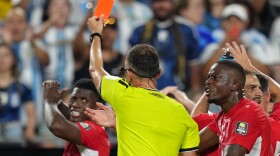 The sending off of Switzerland's Breel Embolo in Saturday's quarterfinal game against Argentina was the latest call that may have left fans scratching their heads, not least because of the confusing name of the newly implemented "mistaken identity" law that swung the match.
 -
 Portugal faces off against an undefeated Colombia team on Saturday at Hard Rock Stadium for one of the World Cup's most anticipated matches. For Portugal fans in Miami, the stakes feel especially high: this is the last World Cup for renowned soccer player, Cristiano Ronaldo.
 -
 During an international event like the FIFA World Cup where people are travelling and celebrating far from home– federal, state, and local law enforcement are ramping up measures to identify and prevent human trafficking. Public awareness and education is a huge factor.
 -
 On Saturday, Haiti will hit the World Cup stage for the second time in its history. The team is not scheduled to play in Miami, but WLRN went to Philadelphia, where it will play a group stage game — and found expectations are high among the diaspora. “This is literally the start of a new era,” said Pascal Marcellus.
 -
 After decades of rooting for Brazil, many Haitian fans now face mixed loyalties as Haiti’s national team heads to its first World Cup in 52 years — where they will face the soccer powerhouse. At a time of chaos, tragedy and unrest in the nation, appearing on the biggest international sporting stage is a chance to show off its competitive and cultural spirit.
 -
 Curaçao has already crafted a story like none other in World Cup history. The tiny autonomous territory of about 156,000 residents is now the smallest, both in terms of population and land mass, to make it to soccer's biggest stage. And if that wasn't enough, it's doing so under a coach in Dick Advocaat who, at 78, is about to become the oldest the tournament has ever seen. They know what the world is probably thinking: Their country is too small, their coach is too old, they don't have a chance. They heard all that through the qualifying process as well — and here they are.
 -
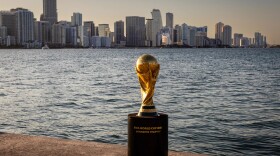 At soccer’s World Cup, the top scorer gets the “golden boot,” and the best goalkeeper is handed the “golden gloves.” This year’s tournament will also provide organizer FIFA with a golden opportunity to create billions in additional ticket revenues.
 -
 With the 2026 FIFA World Cup approaching, Mexico City's Benito Juárez International Airport is a chaotic construction site. Passengers are greeted by buzzing drills and unfinished flooring alongside posters promoting the tournament. Renovations have been ongoing for a year, with over 3,000 workers tackling the project. Airport authorities say the first phase is over 90% complete despite unexpected challenges from old infrastructure.
 -
 The Trump administration is suspending a requirement that foreign visitors from countries that have qualified for the World Cup and have bought tickets for the soccer tournament pay as much as $15,000 in bonds to enter the United States. The department imposed the bond requirement last year for countries that it said had high rates of people overstaying their visas and other security issues.
 -
 A panel of the Florida Legislature agreed Friday to distribute more than $105 million in federal dollars to shield FIFA World Cup matches in Miami from unmanned drones and other attacks.
 -
 “What we are seeing points to blatant violations and intentional efforts to circumvent the commitments and ethical processes that FIFA promised to South Florida taxpayers,” said South Florida AFL-CIO President Jeffrey Mitchell in a statement.

© 2026 WLRN
Play Live Radio
Next Up:
0:00
0:00
Available On Air Stations


