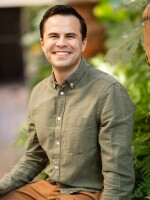
As Florida sheriffs are expressing public reservations about excessive immigration enforcement, the sheriff of Palm Beach County — an area that leads the state in law enforcement contacts with undocumented immigrants — says his stance has not changed.
Palm Beach County Sheriff Ric Bradshaw told WLRN his officers weren’t conducting sweeps, raids, or proactively enforcing immigration law, something he has maintained since last year.
“ I'll do what I have to do in the normal course of law enforcement contacts and business because you can't do anything less than that,” Bradshaw said.
“But we're not out here looking for people,” he continued, “Stopping 'em on the streets, knocking on people's doors, going to places where people are working that we know are Hispanics. ‘Ain't happening.”
The interview with Bradshaw follows comments by prominent, conservative Florida sheriffs this week voicing concerns about non-criminals caught in the enforcement dragnet — concerns which Bradshaw seemed to agree with in the interview.
It also comes as WLRN has been trying to get a clearer picture of immigration enforcement in Palm Beach County, which has seen more than 1,400 arrests on federal immigration charges by empowered state police since August — more than any other Florida county.
Florida Highway Patrol troopers are driving the trend and responsible for about 80%, or roughly 1,170, of those arrests, according to the State Board of Immigration Enforcement. Earlier this month, WLRN reporting focused on an FHP trooper in the county, whose practices experts said obscured attempts to examine racial profiling.
Behind FHP troopers in arrests in the county are Palm Beach County Sheriff’s (PBSO) deputies.
Deputies have arrested 276 people on federal immigration charges alone, and arrested another 118 suspected immigrants who had other pending criminal charges. That places PBSO fourth among sheriff's offices in Florida.
What police check during a stop
Along with all other sheriff’s offices across the state, Bradshaw’s agency signed up for the 287(g) program, which gives local police the authority to enforce immigration law through ICE. The agreements were required by Florida law, though the amount of participation wasn’t.
This allows immigration authority for PBSO deputies on patrol to become “Designated Immigration Officers” (DIOs) and deputies in the jail to become “Warrant Service Officers” (WSOs).
WSOs ensure that immigrants who are detained can be transferred to ICE custody before they are released.
Bradshaw characterized both as administrative and routine, though DIO officers are able to investigate — without a warrant — whether a person is in the country without proper paperwork.

“ Anybody, we stop, for any reason, we start checking 'em, to see if they're wanted. Because you could have a guy that's wanted in Ohio for murder,” the sheriff said, “You don't know it till you run 'em.”
He said his officers are required to check a national warrant database, when responding to calls for service, crime scenes or at traffic stops. After Trump took office last year, ICE uploaded millions of removal orders and administrative warrants to the database. Those are now included in deputies’ review, he said.
“If it comes back to hold for ICE, then because of the 287(g) program, (the deputy) can detain them, take 'em to the jail, and then ICE comes and gets 'em,” he said.
The New York Times reported this week how ICE's field office in Miami had more arrests than any other in the country last year — averaging 120 daily arrests per day.
Half of all arrests last year were "custodial arrests," where ICE takes someone into custody from another law enforcement agency. It's become increasingly common in Florida, where state legislators required sheriffs to participate with ICE in jails, and Gov. Ron DeSantis' administration has pressured police agencies to sign on to 287(g) agreements.
Immigration data lacking
Verifying the circumstances of the immigration arrests has been impossible because the underlying data is unavailable.
On Jan. 23 — nearly two months ago — WLRN filed a records request with the State Board of Immigration Enforcement for Palm Beach County-wide arrest and detention data. As of last week, the agency says the request is still pending. It has been unable to estimate when the request will be completed.
WLRN sent two public records requests to PBSO for data on its immigration activities, as well as detainers in the jail.
The agency said it doesn’t keep any statistics on its immigration enforcement.
PBSO told WLRN that all immigration encounters and arrests are turned directly over to the state immigration board, which created the statewide database.
The database only says what’s happening in aggregate. Details, like who was arrested, where, what preceded the arrest, the demographics of the people involved or what federal agencies were involved, are not included.

Other immigration records from PBSO, that could provide insight into arrests and detentions, were redacted.
WLRN received a list of DIOs under PBSO. There are 118 deputies listed, but roughly half of their names are redacted. PBSO says it is because those deputies work undercover on duties unrelated to immigration enforcement.
In another record provided by PBSO, the agency redacted all details about the type of “rapid (identification) devices” deputies used during immigration enforcement. It was part of an approved reimbursement package for nearly $1 million from the state immigration board.
'Needs to be a path for them'
Comments this week by Sheriff Grady Judd of Polk County, a prominent conservative and chair of the State Immigration Enforcement Council, made headlines across the state.
He and other sheriffs expressed regrets about the enforcement dragnet catching immigrants who were not criminals, but instead contributing members of society.
Judd posited that “maybe there needs to be a path for them.”
READ MORE: Florida sheriff doubles down: Don’t deport undocumented immigrants ‘adding to society’
It’s unclear if he meant a path to citizenship, asylum, or just to be left alone by U.S. Immigration and Customs Enforcement (ICE) agents. Overall, Judd stuck to a tougher position on immigrants accused of committing any crime.
The group debated making recommendations at the next council meeting, sending a letter to the U.S. Speaker of the House and bringing the matter before President Trump.
Gov. DeSantis admonished the sheriffs for considering that, at a recent news conference in Brandenton.
“This idea that unless you’re an axe murderer you should be allowed to stay, that is not consistent with our laws, and it’s also not good policy,” he said. “To send [Trump] a letter asking him to go back on his campaign policies, I would not advise that to be done.”
Asked about the comments, Bradshaw said it matched what he was trying to do in Palm Beach County.
“I don't feel good about taking like the guy that's been here 10 years and works hard, he’s got a family and all that,” the sheriff said.
“I don't feel good about it,” he said, “But I don't really have an option because it's there saying there's a warrant.”