

The world rightly knows the Florida Keys for its tart Key lime pie and its freshly-caught seafood. But to truly understand the island chain's fascinating culinary history, one must first understand the limitations of living on an island.
Nothing is quite so emblematic of that history than a humble insulated wooden box.
Because it took longer for electricity and refrigeration to become more widely available in the Keys, residents had to rely on ice boxes to store perishable staples.
Carlos Cervantes, an unwitting collector of Keys ephemera, has one of these old fashioned ice boxes.
It reminds the 80-year-old of the one his family had growing up in the Keys. As a child, it was Cervantes’ responsibility to shoulder blocks of ice back home to store in their ice box.

“ We never had leftovers. Well, nobody never did them days. And that's basically what it was, just to keep milk, ice, eggs, butter, stuff like that. But not food. Because we got food every day,” Carlos Cervantes said.
The ice box was just one of many antiques he has acquired over the years, and now it’s on display at the Key West Museum of Art & History as part of its latest exhibit called “Celebrating Conch Cuisine.”
It stems from a partnership between The Smithsonian Institution and Florida Humanities, which has collaborated with seven other cultural organizations across the state to host exhibits on a respective region's culinary history and the influence on its people.
Cori Convertito, the curator and historian for the Key West Art and Historical Society, said they asked people in the community to lend their culinary artifacts to the museum.
" I'm glad they couldn't bring themselves to maybe put it out in the trash bin or put it out at a yard sale. That was really rewarding to see [people] realize that their families’ objects and and their stories were more than just personal sentiment. There was a community value to it,” Convertito said.
That much is certain for Chaze Cervantes, a fifth-generation Conch who encouraged his father Carlos, to donate the ice box, among other items, to the museum exhibit.
“ Everybody has their own history and beginning,” said Chaze. “[The ice box] definitely symbolized the fact that we were far away from the mainland and we kind of had to use what we had to make things work.”
That inherent mode of resourcefulness combined with an insular society evolved Key West into the kind of tight-knit community predicated on knowing people — not just by their name, but by their family. Chaze's father Carlos, recalled a time in the Keys where everybody knew their neighbor.
"Because Key West counted on people, you know what I mean? There was no fences, no locks, nothing. Just good people," Carlos Cervantes said of life growing up in the Keys.

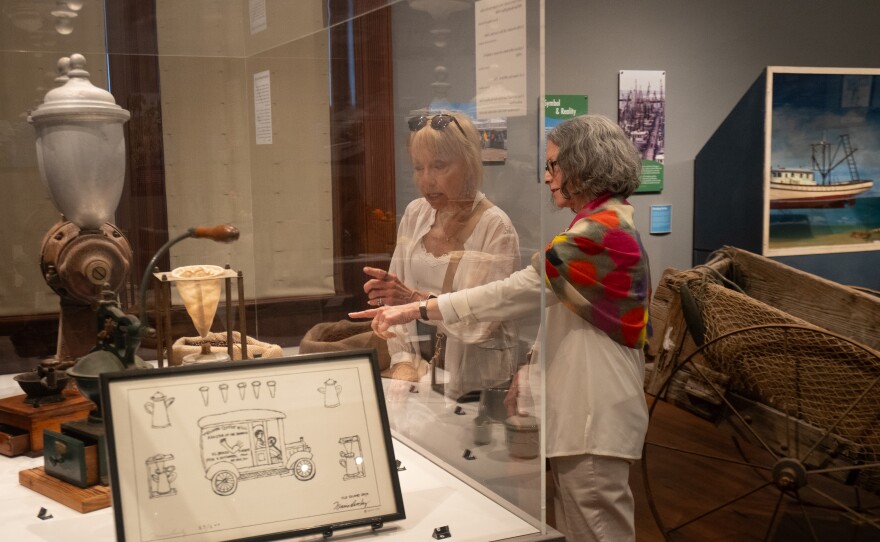

Each display reveals the ways people would gather, preserve or cook different ingredients and how those methods have changed over time. An old fish peddler’s cart draped with netting sits next to a diorama of a fishing boat. Another glass case features varied citrus juicers and an array of blades and graters used to cut up the notoriously tough flesh from conch.
Such cooking tools are essential to the preparation of signature Keys dishes, including conch salad, a raw seafood dish with fresh conch, peppers, onions and lime juice that reflects the way migratory groups from the Bahamas and Cuba have shaped the local cuisine.
READ MORE: Meet the FIU student workforce behind South Beach Wine & Food Festival
And of course, there’s a section dedicated to the iconic Key lime pie, showing the way time has spawned variations on the recipe. It invites healthy debate, Convertito said, such as what goes on top of the tart dessert: meringue or whipped cream?
Convertito posits that the former may have been the more traditional ingredient back when home cooks wanted to make use of not just the yolks but the egg whites as well. The emergence of whipped cream, Convertito said, nods to a change in consumer habits and food traditions as more grocery stores started opening up in the Keys, giving people access to more food products.
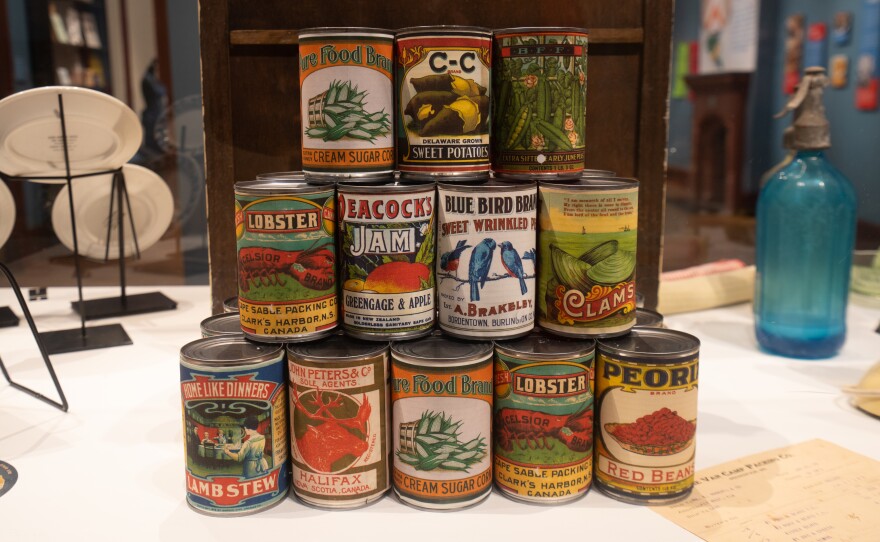

Much can be learned from what’s on the dinner table, and Convertito relishes the chance to elicit family traditions and memories from older generations of Conchs and share them with younger generations.
“Everybody eats, everybody swears their mom's food is the best in the world. There's a lot of cultural issues that have been channeled down to you through recipes from your grandmother or your mom or your aunts and whoever,” she said. “I think people don't even realize that they're becoming their family's historian by doing that. I want to empower people to feel responsible to continue their family's legacies."
The exhibit will be open and on view for the public through Jan. 3, 2027.


