Billionaire investor Ken Griffin said the new Miami campus for Carnegie Mellon University he has funded with a record donation will help "build the future of America."
The hedge fund CEO spoke alongside Florida Gov. Ron DeSantis and other dignitaries at a lavish event Thursday in the city's Wynwood neighborhood, where the campus is set to open in 2028, just a day after the $2 billion development was revealed in a surprise announcement.
Carnegie Mellon University Miami, the new outpost for the prestigious private research university based in Pittsburgh, will focus on engineering, artificial intelligence and robotics curriculum.
As rain poured outside, DeSantis — who has aggressively reshaped public universities in the state during his governorship to contentious effect — enthusiastically backed the new project. He said administration is “very proud” of its public university system, particularly its low in-state tuition — but that private universities also have a lot to offer.
“I think this Carnegie Mellon is going to be really leading to create an ecosystem that's going to be really, really special — not just for Miami, not just for South Florida,” he said. “What's happening here is going to be very important for the United States of America and the safety and security of our country.”
READ MORE: Hedge fund CEO Ken Griffin gives record $3B to Carnegie Mellon to build Miami campus
Miami billionaire and hedge fund manager Ken Griffin is pouring $2 billion into the new campus. He’s contributing another $1 billion into the university’s original location in Pittsburgh. The combined donation is the largest in higher education history.
Carnegie Mellon is known for its art programs, which US News & World Report ranked the second in the country last year. But the Miami campus will focus primarily on STEM fields. The university is first in the rankings for fields including computer science and AI.
Griffin said the university’s dual strengths in humanities and sciences will help the new campus address “the opportunities and challenges that our country faces.”
“The future of America is being built in Pittsburgh,” he said. “That future will be strengthened by what we build in Miami.”

Local impact
The new campus will be organized around “challenge areas” like national security and biological discovery, rather than traditional departments or colleges.
“These are fields that clearly are shaping the future of our economy and creating the jobs of tomorrow,” said Miami-Dade Mayor Daniella Levine Cava on Thursday. “And now, right here in the 305, bringing expertise here that creates an incredible opportunity for our county or region.”
She pointed out the university will benefit local businesses and entrepreneurs as well as students. And it’ll also build on the strengths of local institutions like FIU, UM and Miami-Dade College, she said.
The area’s existing universities had already raised concerns about how the new school will affect their own interest and enrollment. At a Florida Board of Governors meeting Wednesday, Chair Alan Levine said Carnegie Mellon would be “competing for the best and brightest talent.”
But he added that he welcomed the challenge. “While we celebrate these investments, we also need to recognize what we have. And that what we have is always under threat from competition,” Levine said.
With a target enrollment of 3,500 students, the Carnegie Mellon campus will be built on about 35 acres in Wynwood, a once-industrial area that has become a hub for arts and tech. It’ll take over the former Mana Wynwood building, which held music festivals, art shows, expos and other events.
Previous site owner Moishe Mana revealed he sold 30 acres of his Wynwood portfolio to Griffin for about $1.1 billion. He described it as the largest land assemblage deal in Florida history. At the event Thursday, he said he originally wasn’t interested in selling.
“In the beginning, I didn’t think it’s a good idea … it’s my baby,” he said. “It took me three days to sleep on it.”
But Mana eventually understood the development would be good for Miami, he said. Though he wasn’t originally told the name of the university eying the spot, he knew it would be used for educational purposes — and that, along with the billion-dollar price tag, was enough to convince him.
He described the purchase as “a great day for Miami and the state of Florida and the whole of America.”
From CAPTCHA to Roku
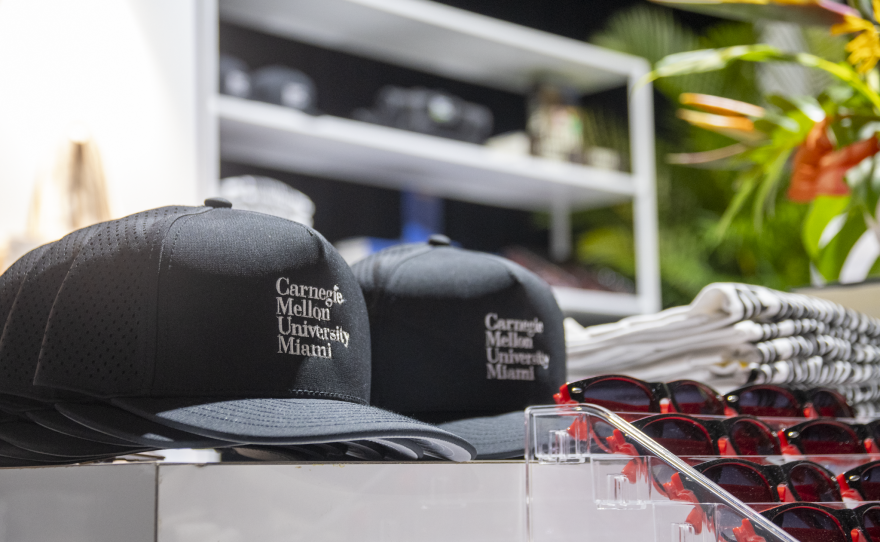
The new campus’ name — Carnegie Mellon University Miami — covered the event space at Thursday's event. It appeared on baseball caps, tote bags, napkins laden with tequeños and even printed onto the milky foam of made-to-order lattes.
Established in 1900, Carnegie Mellon is a selective university with just 7,700 undergraduate students. It admitted just 11% of applicants to its Pittsburgh campus last year. Tuition costs about $70,000 per year.
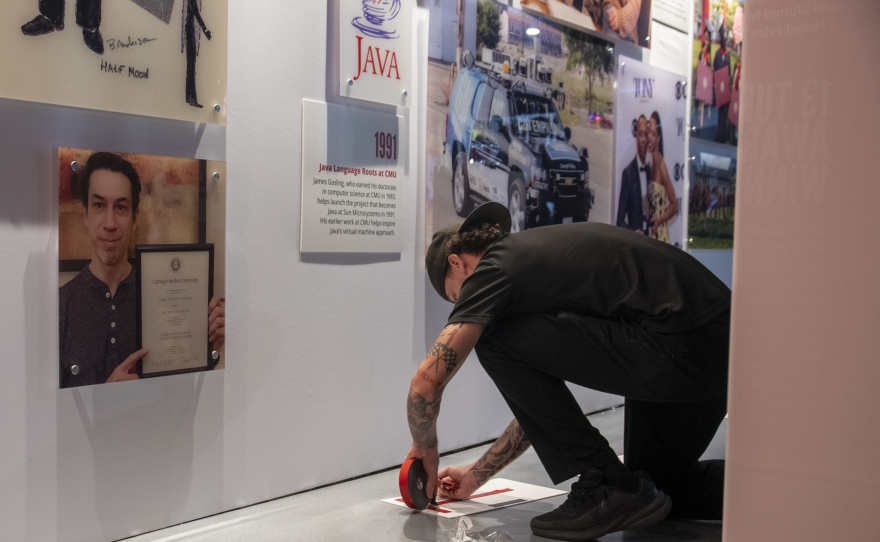
Across the event space, a timeline dated from 1900 to 2025 displayed key events in Carnegie Mellon’s history, many of them STEM-related — the invention of CAPTCHA to a Roku remote, whose development is tied to the university through its industrial design alumni.
The university also flew in a dozen students, many pursuing degrees in engineering, to sit beside the stage during the event. Emily Wan, a computer science student, and Kate Giang, a biology student, arrived in Miami at about 6 a.m. Thursday.
It’s their first time in the city, but they won’t stay long; they were set to return to Pennsylvania only 12 hours later. They’ve managed to keep the trip secret for about a week and a half.
The campus will begin construction in 2027, with master planning underway, said Paul Darrah, the chief workplace officer of Citadel, Griffin’s titan hedge fund company. The campus will include residential housing, as well as research and academic units. Its initial class will be about 1,000 students in size.