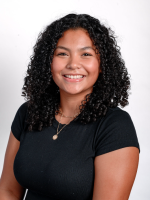
When Raquel Puig Zaldivar was sent to meet a federal prison inmate while working as a freelance attorney in the 1990s, it unexpectedly reignited her love for writing.
The encounter inspired Bolero, her first novel to be published in almost 30 years.
The story follows fictional Miami attorney Natalia Armand as she searches for answers after a fire and explosion at one of her client’s properties. The townhome was rented by Alberto Maciel, a Cuban chemical engineer accused of conspiracy to traffic drugs, who was loosely based on the inmate Puig Zaldivar interviewed.
In the novel, Maciel, who started his career in Nicaro, Cuba, the island nation's most significant nickel mining town, is the lead witness against a cartel kingpin.
While investigating Maciel's death for her client, Armand is caught up in a dangerous conspiracy — one that may be connected to her own past.
While writing the story and developing her characters, Puig Zaldivar couldn't simply imagine the places she mentioned. Her research took her to Cuba for the first time since her family left the island when she was 10 years old. She retraced her characters' steps, from Miami to Nicaro.
"I had never thought that I would go to Cuba again... I was so ready to do what Bolero required, that I just went all in," she said.
Puig Zaldivar recently sat down with WLRN to discuss the process behind her new novel.
This story has been edited for brevity and clarity.
WLRN: What inspired you to write this story?
PUIG ZALDIVAR: There were two things that were happening. One was my personal life. I was kind of in emotional paralysis.
I couldn't write. And then the story of Maciel came around, and his story intrigued me tremendously. I think it came at the right time, and writing Bolero got me out of [that] emotional paralysis.

You mentioned Alberto Maciel, or rather the person who inspired Maciel's character in your book. How did you meet?
I met Maciel in 1995 at the federal prison. I was asked by my then supervisor to go and interview him. I just needed to know the facts about his case to report back... but the facts and his attitude towards his case, were the things that intrigued me.
So I went back, and for a whole month I went almost every day. He had no problems with my interviewing not only him, but everyone in his life whom he mentioned. And I interviewed all these women that were in his life, thinking that they were going to tell me horrors about Maciel because his life was not necessarily very honorable with all of them.
But all of them were just as fascinated with him as I was when I first met him.
I would say that Miami and Cuba play key roles in this story, almost like they're characters, too. You mention locations like Versailles, Cafe Nostalgia, the Nicaro Nickel Factory. How important was it for you to incorporate these places into the novel?
I think this is a Miami story. One of the main characters is Cuban.
You know, it's very difficult for a Cuban to get rid of his or her Cubanness. It's there. It somehow comes in. When Maciel mentioned Nicaro, I had no idea what Nicaro was, and I started asking around, "Where's Nicaro?" I looked at the map. I said, "Oh my God." I was born in Cuba, but I left when I was little, and I never left Havana.
So this was a mystery to me. And I, when I began writing this section where Nicaro became a character, I said, "My goodness, how do I do this?" A friend of mine showed me pictures. I said, "No, no, no, but pictures are not enough." And I had never thought that I would go to Cuba again, but I said, "Well, yeah, why not?" I was so ready to do what Bolero required, that I just went all in.
I stayed at people's houses, which was amazing because I understood the problem of these people, the suffering, and how they face it with such a positive attitude… that it's incredible. I loved going to Cuba on that trip. That part of the book was very gratifying.
What do you hope readers take away from reading Bolero?
When I read Bolero for the 10th or 13th time, I asked myself that question. I think it’s [to] seize the moment. There are moments in your life in which you are given a choice. You either grab them and take them, or you let them go and, and make nothing of them.
And all of these characters, especially Natalia, seized the moment. She saw there the opportunity to find out the truth, and she went with it, even though it was not to her benefit because she suffered a lot. She grieved, she went through many emotions.
IF YOU GO
What: Bolero, An Evening with Raquel Puig Zaldívar
When: Saturday, June 6, 2026, 6 p.m.
Where: Books and Books Coral Gables, 265 Aragon Ave Coral Gables, FL 33134-5008
More information? Click here