

On a sweltering afternoon on Virginia Key Beach, field researchers at the University of Miami Rosenstiel School's Coral Restoration Lab rushed from the ocean, carrying plastic crates filled with elkhorn corals.
Still wet from the water, they inspected the corals and prepared them to be placed in temperature-controlled tanks for the summer.
They join a wave of rescue missions on Florida’s coast that are removing corals from the sea, in hopes that they can give them a fighting chance this blistering summer.
This marine heat wave, with no end in sight, has already started to affect corals which often start to decline at around 86 degrees Fahrenheit.
READ MORE: South Florida coral are in hot water again. Their caretakers have a plan
According to researcher Julia Cafiero at the Coral Reef Futures Lab, her dive computer indicates that the ocean has reached 87 degrees — and temperatures are likely to rise.
“We know that this is just the beginning,” Cafiero said, joining the other researchers outside. “Because of what we’re seeing, it’s worse than 2023.”
In July of 2023, ocean temperatures reached an unprecedented 101.1 degrees Fahrenheit in northern Key Largo — spurring frantic efforts to save starving corals on the ocean floor.
But rescue missions could not stop the mass bleaching event that would lead to the functional extinction of elkhorn and staghorn corals today.


As this summer’s ocean heat wave intensifies, researchers are trying a different method; extracting certain remaining elkhorn corals from the sea before temperatures reach deadly heights.
But this warming water does not just stop at the Keys.
" The Gulf Stream brings up that warm water from the Keys, and it passes through Miami and goes all the way up the East Coast." Cafiero said.
"So it'll bring that warm water to Miami, which is not great for our corals here."
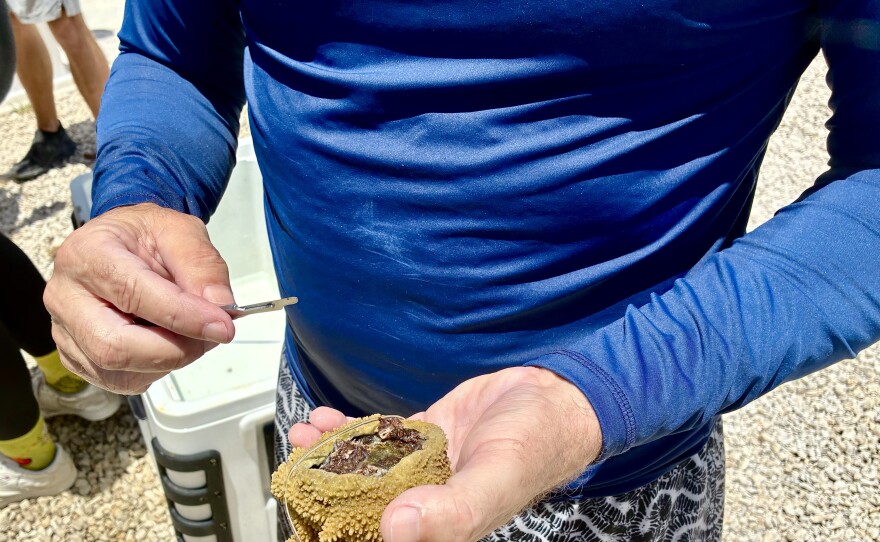
Diego Lirman, the lab's director, stood above the crates, cleaning the underside of a coral.
Turning the elkhorn coral over in his hand, he spoke about what he saw underwater during the rescue mission.
“We started to see it paling, which is an early sign of bleaching and that’s why this [coral rescue] has been triggered.” Lirman said.
“[Elkorn corals] have been declining for a couple of decades in the Keys because of multiple factors, mainly driven by climate change.”
Climate change has fueled these blistering temperatures. The sea often acts like a sponge, absorbing 91% of the heat trapped by greenhouse gases — progressively warming as greenhouse gases increase.
The death of elkhorn corals, due to rising ocean temperatures, has been particularly devastating to Lirman.
“Elkorn and staghorn coral are very important because they grow very fast” Lirman said.
“So when healthy, they provide a lot of habitat for associated organisms, fishery species, and they also give a lot of coastal protection.”
According to researchers, coral are often the first line of defense when hurricanes hit.
“[Miami] is a coastal city and we’re directly impacted by wave action [during hurricanes]” Cafiero said. “And when we get hurricanes rolling through because of these increased climate change events, the live corals actually absorb that wave action.”
Fate of corals at risk
In the outdoor lab, field researchers carefully removed the corals from their crates, placing them in climate-controlled tanks.
Out at sea, 400 corals have been moved to deeper parts of the ocean where temperatures are cooler.

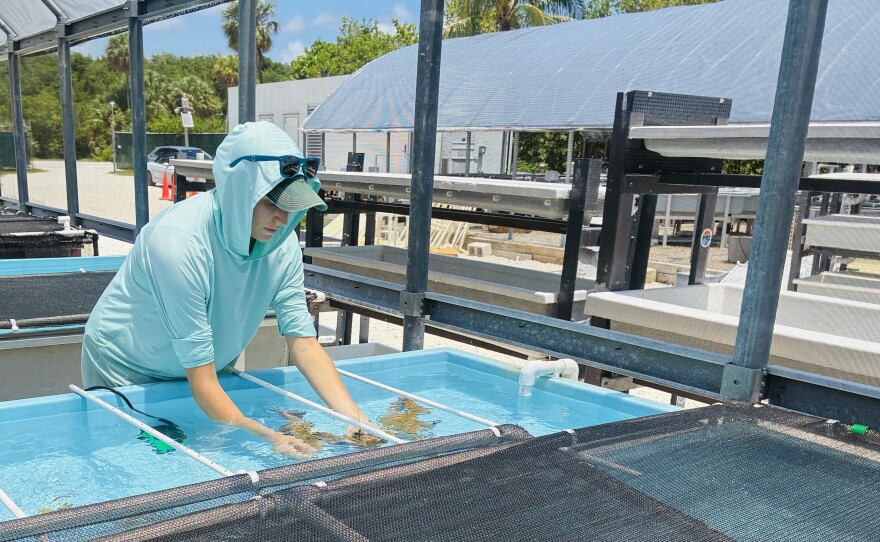


Researchers at the lab hope that the corals they place in tanks will be able to transition back to the ocean by the summer’s end.
But the fate of corals remains at risk, as climate change intensifies and funding for rescue missions like these dry up.
“In the last few months, the state of Florida promised another round of funding,” Lirman said. “But the funding for the second for the [restoration] program did not make it into the budget. So we’re facing a shortfall to maintain these facilities and keep restoring at the rate we were before.”
In 2023, Gov. Ron DeSantis issued an executive order that would budget $28.5 million to get a “coral pipeline” up and running. But the state has eliminated promised funding that was supposed to go towards expanding coral restoration programs.
Cameron McMath, the lab's facilities manager, stood over the tank, evaluating the corals that were delicately placed in the light blue tubs.
He remains hopeful that efforts like these can prevent mass bleaching.
“This year is slightly different,” he said. “Because instead of reacting, we are proactively taking action before we start to see those signs.”


